Dreaming In the Ashes
michael young
Ten days ago, millions of us stood in line, filled in our ballots, and went home to wait for the results. In the lead-up to these elections, many of us, me included, were filled with anxiety about federal election interference. So, on Election Day, I stood watch as a Poll Chaplain. My job, as a pastor, was to be a peaceful presence for those coming to vote. Thankfully, it was a boring three-hour shift that ended without incident.
Boring is a gift. A quiet polling place, where neighbors can cast their ballots without fear, was not always a given in this country. As a matter of fact, for Black Americans, voting, or even organizing to register voters, could, and did, bring violent retribution.
In the fall of 1962, Prathia Hall was a young organizer with the Student Nonviolent Coordinating Committee, working to register Black voters in a place so violent it was nicknamed “Terrible Terrell.” She and other young workers lived with Mrs. Carolyn Daniels and her son Roy in their small two-bedroom home in Dawson, Georgia. The house became known as the freedom house, and that made it a target.
On the night of September 6, night riders drove by and fired into the house. Prathia Hall was wounded, along with two other young workers.
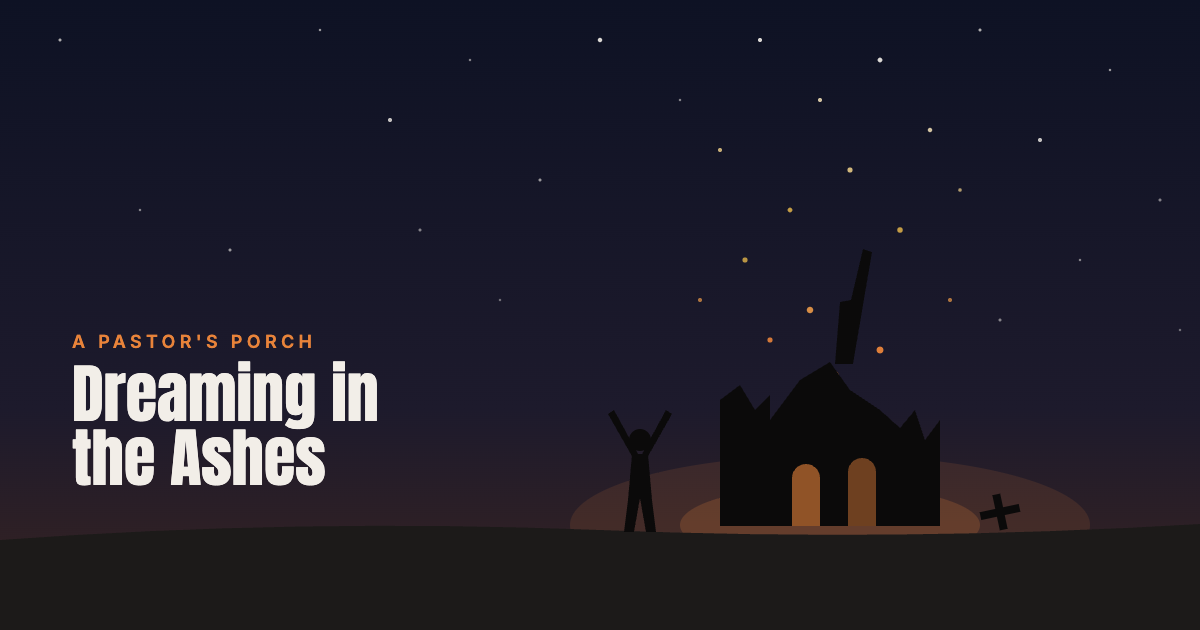
Three days later, white terrorists burned the Mount Olive Baptist Church to the ground. Its crime was opening its doors to Black neighbors registering to vote. Prathia Hall, still carrying the wounds of that night, stood in what was left of that church and prayed. Over and over, she said, “I have a dream.”
The story goes that Dr. King heard her and asked if he could borrow those words. Eleven months later, he carried them to the steps of the Lincoln Memorial.
What stays with me is not only where the dream ended up, but where it began. It didn’t start at a podium in front of 250,000 people, or after the danger had passed. It was spoken in the ashes, in a prayer.
But its roots go deeper still. The dream Rev. Dr. Martin Luther King Jr. proclaimed was born hundreds of years earlier, in the holds of the thousands of ships that made the treacherous, deadly voyage across the Atlantic: the Middle Passage. It rose as a prayer in the cotton, sugar, and tobacco fields. The dream of freedom began as a prayer in the hearts of those the slave economy treated as property, as chattel.
I’ve come to believe that praying is a kind of dreaming. When Jesus prayed on the night before he died, as John’s Gospel tells it, he didn’t pray for his own safety. He prayed for us, “that they may all be one.” I hear a dream in that prayer that keeps widening, until it holds all of humanity.
But hearing that dream takes practice. Howard Thurman called it listening for “the sound of the genuine,” the voice God has placed in each of us. It also takes patience with Scripture. The Bible holds texts of grace beside texts of fear, and we can stop at the fear if we want to. Many have, and built whole institutions on it. Or we can keep listening for where the story is going, which is always toward love.
Dr. King knew that story. He’d been jailed, had his home bombed, and been told to wait. In a Birmingham cell, writing in the margins of a newspaper, he answered that “wait” has almost always meant “never.” And he kept dreaming anyway.
That’s the gospel pattern. You can nail the body to a cross, but you cannot take God’s love out of the world. You can burn the church, sow seeds of hate, and crucify bodies in the streets and town squares, but you cannot have the dream. That dream is ours.
We are living in our own season of ashes.
Last winter, on the frozen streets of Minneapolis, neighbors were killed by federal agents sent into their city. Dehumanizing, racist language fills our airwaves, and plenty of voices are telling us to sit down, be quiet, and wait.
It would be easy to stop dreaming.
But the dream didn’t die in the ashes of Mount Olive. It didn’t die when Rev. Dr. Martin Luther King Jr. was murdered. It didn’t die when the powers and principalities tried to keep us from the ballot box. It lives on in the souls of all who look out on the world and see the goodness that is yearning to break through, to rise, to be born, to be set free.
Let us keep this truth close to our hearts: To dream is to hope, and to hope is to live.
God, the sacred Us, I AM, Father/Mother/Sacred Parent, Christ of the Cosmos, Great Spirit, Creator of the Good Road[2], He, She, They—keeps dreaming that we may live as one connected humanity.
We shall not be done dreaming, because God continues speaking and dreaming for us.
[2] Great Spirit” is a common English translation of Gichi-Manidoo, the Anishinaabe name for the Creator. I use it to honor the Ojibwe, Odawa, and Potawatomi peoples, on whose homelands we live in Michigan. “Creator of the Good Road” is my own phrase, inspired by Lakota spiritual teaching about walking the good road in right relationship with the Creator and all creation.